
The Church as the Bride of Christ (Part IV)
The Holiness of the Church. The Church of Christ is One because the Body of Christ is One, and all Christians partake in this unity through the Mysteries (Sacraments). In the same way the Church of Christ is Holy because the Body of Christ is Holy, and all Christians partake in this holiness through the Mysteries (Sacraments).
My beloved spiritual children in Christ Our Only True God and Our Only True Savior,
CHRIST IS IN OUR MIDST! HE WAS, IS, AND EVER SHALL BE.
+++
THE CHURCH AS THE BRIDE OF CHRIST (Part IV)
By Vladimir Moss
The Holiness of the Church. The Church of Christ is One because the Body of Christ is One, and all Christians partake in this unity through the Mysteries (Sacraments). In the same way the Church of Christ is Holy because the Body of Christ is Holy, and all Christians partake in this holiness through the Mysteries (Sacraments).
The distinction between the Church as organism and the Church as organization is useful again here. Thus Hieromartyr Mark writes: "Only to the Church-organism can we apply such titles as we meet in the Logos/Word of God for example: "Glorious, Holy, Spotless" (Ephesians 1:4); 'the Bride of the Lamb' (Revelation 19:7; 21:9); 'the Body of Christ' (Ephesians 1:23; Colossians 1:24); 'the pillar and ground of the Truth' (1 Timothy 3:15). These concepts are inapplicable to the Church-organization (or applicable only with great qualifications); they lead people into perplexity and are rejected by them. The Church-organism is the pure 'Bride' of Christ (Revelation 21:2), but the Church-organization has all the faults of human society and always bears the marks of human infirmities...The Church-organization often persecutes the saints of God, but the Church-organism receives them into her bosom...The Church-organization rejects them from its midst, deprives them of episcopal sees, while they remain the most glorious members of the Church-organism...
Thus the Church as organism is one and holy, while the Church as organization is often divided and impure. As an image of this distinction let us consider the two Marys, Mary the Mother of God and Mary Magdalene, who went together to the tomb to meet the Risen Lord (St. Matthew 28:1). The one Mary, the Mother of God, is already "holy and without blemish", "not having spot, or wrinkle, or any such thing" (Ephesians 5:27), while the other Mary Magdalene, is "black, but comely" (Song of Songs 1:5), being not yet completely purified through repentance. The one represents the Church Triumphant (Heavenly Church), already "full of grace" (St. Luke 1:28) and crowned with the Bridegroom at the right hand of the Father, while the other is the Church Militant (Earthly Church), still having to struggle with sin both within and outside her.
Just as, in a marriage between a believer and an unbeliever, the unbeliever partner is sanctified through the union with the believer, and their children, too, are sanctified (1 Corinthians 7:14), so in the marriage between God and man that takes place in the Church, man is sanctified through his union with God. Saint John Chrysostom puts it as follows: "God desired a harlot...and has intercourse with human nature, (whereby) the harlot herself is transformed into a maiden." Again, Bishop Nikolai Velimirovich writes: "It is a great mystery when a man leaves his father and mother and cleaves to his wife. The Apostle himself, who has been raised to the third heaven and beheld many heavenly mysteries, calls the marriage of natural man on earth a great mystery. It is the mystery of love and life, and the only mystery that exceeds it is the mystery of Christ's bond with His Church. Christ calls Himself the Bridegroom and the Church the Bride. Christ so loves the Church that He left His heavenly Father for her - though remaining equal with Him in unity of essence and Divinity - and came down to earth and clave to His Church. He suffered for her sake that He might by His Blood, cleanse her from sin and from all impurity and make her worthy to be called His Bride. He warms the Church with His love, feeds her with His Blood, and enlivens, enlightens and adorns her with His Holy Spirit."
The Church remains holy as long as she remains faithful to her Bridegroom (Christ). The holiness of the Church which is communicated through the sacraments is not tarnished by the personal sinfulness of the priest who administers them as long as he remains within the Body. But immediately he steps outside the Body and commits spiritual adultery with a heretical body, he ceases to be a channel of holiness, and the so-called "sacraments" he administers are not a source of holiness, but of defilement.
The individual Christian participates in the holiness of the Church as long as he remains faithful to her and does not enter into communion with heretics. Thus Saint John the Almsgiver writes, "If, having legally named a wife in this world of the flesh, we are forbidden by God and by the laws to desert her and be united to another woman, even thought we have to spend a long time separated from her in a distant country, and shall incur punishment if we violate our vows, how then shall we, who have been joined to God through the Orthodox Faith and the Catholic Church - as the Apostle says: "I have espoused you to one husband that I might present you as a pure virgin to Christ" (2 Corinthians 11:2) - how shall we defile the Orthodox and Holy Faith by adulterous communion with heretics?" For the heretical communion have ceased to be holy churches," writes Nicetas of Remesiana, "inasmuch as they have been deceived by doctrines of demons, and both believe and do otherwise than is required by the commands of Christ the Lord and the traditions of the Apostles.
__________________________
"Glory Be To GOD For All Things!" - Saint John Chrysostomos
+++
With sincere agape in His Holy Diakonia (Ministry),
The sinner and unworthy servant of God
+Father George
The Church as the Bride of Christ (Part III)
The Church is one both in the sense that there is only Church, and in the sense that her members are united both with Christ and with each other. This unity is for the closest possible kind, both spiritually and bodily, and analogous to the unity of a man and his wife, being a participation, through the Sacraments, in the union effected by Christ with human nature at the annunciation. Christ is the Head and Bridegroom of the Church, and all the individual members of the Church are united with Him as with her Head and Bridegroom; for as the friend of the Bridegroom said, "I have betrothed you to Christ to present you as a pure bride to her one Husband (2 Corinthians 11:2; cf John 3:29).

My beloved spiritual children in Christ Our Only True God and Our Only True Savior,
CHRIST IS IN OUR MIDST! HE WAS, IS, AND EVER SHALL BE.
+++
THE CHURCH AS THE BRIDE OF CHRIST (Part III)
By Vladimir Moss
The Oneness of the Church
The Church is one both in the sense that there is only Church, and in the sense that her members are united both with Christ and with each other. This unity is for the closest possible kind, both spiritually and bodily, and analogous to the unity of a man and his wife, being a participation, through the Sacraments, in the union effected by Christ with human nature at the annunciation. Christ is the Head and Bridegroom of the Church, and all the individual members of the Church are united with Him as with her Head and Bridegroom; for as the friend of the Bridegroom said, "I have betrothed you to Christ to present you as a pure bride to her one Husband (2 Corinthians 11:2; cf John 3:29).
Now the oneness and unifying power of the Church can be derived from the meaning of the "Church", ekklesia, in Greek. For this literally signifies the "calling out" (ek-klesia) of those who before were separated from unity into unity with each other. As Saint Cyril of Jerusalem says, "it is rightly called "Church" (ekklesia) because it calls forth and assembles together all men."
Bishop Gregory (Grabbe) has developed this idea as follows: "It is very important to understand correctly the derivation and meaning of the word 'Church'. E. Bogdashevsky gives a fine, brief philological explanation of the word: "By simple philological derivation the Church (in Greek, ecclesia) is an assembly; this word corresponds to the Hebrew gahal...
But if the Church is one, how are we to understand the divisions in the Church?
These are of two major kinds: the more easily comprehensible divisions that have taken place form the unity of the Church (the heresies, schisms, unlawful assemblies, etc.), when a group has been officially cut off from the unity of the Church by an act of the Church herself; and the more puzzling kind of divisions that have taken place within the unity of the Church, when communion in the sacraments have been broken, but the conscience of the Church recognizes that both sides still remain within the Body of the Church. The latter kind of division is puzzling because if the Church is one, and her unity is an organic and visible unity created by unity of faith and participation in the sacraments, it is difficult to see how there could be such a thing as a division within, as opposed to from, the Church. Is Christ divided? Can there be more than one body rightly calling itself the Body of Christ?
In considering this problem, it is useful to examine a distinction made by the Russian New Martyr (perhaps Martyr-Bishop) Mark (Novoselov) between the Church as an organism and the Church as an organization. "It is necessary to distinguish between the Church-organism and the Church-organization. As the Apostle taught: "You are the Body of Christ and individually members of it" (1 Corinthians 12:27). The Church-organism is a living person, and just as the cells of our body, besides having their own life, have the life that is common to our body and links between themselves, so a man in the Body of Christ begins to live in Church, while Christ begins to live in him. That is why the Apostle said: "it is no longer I who live, but Christ lives in me" (Galatians 2:20).
"The basis for the affirmation of the Church-organism is love for Christ. The Lord Himself saw the basis of His Church precisely in love for Him. He asked St. Peter: did he love Him? And He added, "Feed My sheep". The Church of Christ is the union of mutual love of the believers ("United by the bond of love and offering themselves to Christ the Lord, the Apostles were washed clean", (Canon of Holy Thursday). Only in the Church organism can true democratism, equality, and brotherhood come into being; we are equal and brothers only if we are parts of one and the same living body. In the organization there is not and cannot be organizational equality and brotherhood."
In other words, the unity of the church is organic rather than organizational. Divisions from the Church constitute divisions from both the organism and the organization of the Church. Divisions within the Church, on the other hand, are divisions within the organization only, the organism remains undivided.
Bishop Ignatius (Brianchaninov)compared the organizational divisions within the Church of the last times to the different parts of a shipwreck: "God desires and seeks the salvation of all. And He is always saving all who wish to be saved from drowning in the sea of life and sin. But He does not always save in a boat or in a convenient, well-equipped harbor. He promised to save the holy Apostle Paul and all his fellow-travelers, and He did save them. But the Apostle and his fellow-passengers were not saved in the ship, which was wrecked; they were saved with great difficulty, some by swimming and others on boards and various bits of the ship's wreckage."
(To be continued)
______________________
"Glory Be To GOD For All Things!" - Saint John Chrysostomos
+++
With sincere agape in His Holy Diakonia (Ministry),
The sinner and unworthy servant of God
+Father George
Satan and the Fall
In the devil, there is no truth. He is the very source itself of every form of lie. "For the devil has sinned from the beginning" (1 John 3:8), and leads mankind astray into sin. Satan is not simply a negative concept of evil but, quite the contrary, a real power. He has free will, devices (2 Corinthians 2:11), and wiles, (Ephesians 6:11). He is a personal force capable of perceiving, even before the Resurrection, that Christ is the Son of God.

My beloved spiritual children in Christ Our Only True God and Our Only True Savior,
CHRIST IS IN OUR MIDST! HE WAS, IS, AND EVER SHALL BE.
SATAN AND THE FALL
By Protopresbyter John Romanides of blessed memory (+m 2001), from "The Ancestral Sin," pp. 75-84.
In the devil, there is no truth. He is the very source itself of every form of lie. "For the devil has sinned from the beginning" (1 John 3:8), and leads mankind astray into sin. Satan is not simply a negative concept of evil but, quite the contrary, a real power. He has free will, devices (2 Corinthians 2:11), and wiles, (Ephesians 6:11). He is a personal force capable of perceiving, even before the Resurrection, that Christ is the Son of God.
Under his command, he has whole legions of demons and invisible powers, and among them, some are more evil than others. The devil and his army of demons have the same teachings. Thus, there exists demonic wisdom (St. James 3:15), "the wisdom of the rulers of this age" (1 Corinthians 2:8). The demons know that there is one God, and from their assaults against Christ, they perceived His Divinity. They know who Christ's true followers are. But Christians also know the devices of the devil. The demons instigate the Crucifixion of Christ. They do not know the wisdom of God, however, or they would not have crucified Him.
Satan, like God, has faithful sons and followers. The views that Satan is an instrument of the Divine wrath (which is typical of Post-Augustine Western theology) or that the present power and energy of the devil is only an illusion stand squarely in opposition to Biblical and Patristic testimonies. According to the thought of the first Christians, Satan continues to be a powerful enemy of God. Like a kind of parasite, the devil subjugated creation to death and corruption. "He was the man slayer from the beginning" (St. John 8:44). Thus, through the instrumentality of man's fear of death, the devil became the holder of that power, and through that fear drew the world into sin. In other words, "Sin reigned in death" (Romans 5:21) because "the sting of death is sin" (1 Corinthians 15:56). "There is no fear in love, but perfect love casteth out fear because fear hath torment. He that feareth has not been made perfect in love" (1 John 4:18).
Because of the sins that spring forth from the fear of death, "the whole world lieth in wickedness" (1 John 5:19). Through falsehood and fear, Satan, in various degrees, motivates sin. In a certain way, he is the god and ruler of this age or world. But this does not justify the devil's claim that to him has been given all authority over the kingdoms of the earth. God has never ceased to care for the world. Through laws, Prophets, and chosen leaders, He guides and chastens men. If it were possible, the demons would have pulled down everything, even the heavens along with the rest of creation. But in no way are they able to do it. Certainly, the God and Father and Creator of all things has not abandoned mankind but has given a Law and sent Holy Prophets to teach and proclaim to the human race the return to sobriety and the knowledge that God is one.
Despite the victory of the Lord and of the baptized over Satan, the evil spirit is able to move the "hear to lie to the Holy Spirit" (Acts 5:3). Moreover, the "god of this age" blinds "unbelievers' minds lest the light of the Gospel of Christ rise on them" (2 Corinthians 4:4). For the restraint which human laws could not effect, the Divine Logos/Word would have effected has not the demons, taking as their ally the wicked lust in every man which draws him to all manner of vice, scattered many false and profane accusations, none of which attach to us. With great sincerity, Justin, a former Platonist, writes: "Therefore, we forewarn you to guard yourselves lest the demons we speak against delude you and turn you away from reading and understanding all that we have said. "But I fear", writes Saint Paul "lest in any way, as the serpent deceived Eve by his craftiness, your thoughts should be corrupted from the simplicity that is toward Christ" (2 Corinthians 11:3). The devil persistently and in every unlawful manner tries to subjugate men. To accomplish this, he has effective, powerful, and cunning ways of deception. And if indeed the wrath of God had such agents, it would be hopeless for the human race because the only way to be saved would be absolute predestination.
Athenagoras and Justin write that God "committed the care of mane and of all things under heaven to Angels whom He placed over them. But the angels violated this appointment and were captivated by women and began children who are called demons." The souls of the giants are the demons that wander around the earth. And furthermore, they subjugated the human race to themselves...and sowed every manner of evil. Therefore, having believed the deceiving demon, men dared to disobey God and departed from Paradise. The devil was the cause of his own apostasy and that of others. Man disobeyed God, having been deceived by the angel who, because of God's many gifts to man, was jealous and cast a spell on him, thus ruining himself and convincing man to sin through disobedience of the commandment of God...Thus, by his falsehood, the devil was the cause of man's exile from paradise.
(To be continued)
____________________________
"Glory Be To GOD For All Things!-Saint John Chrysostomos
+++
With sincere agape in His Holy Diakonia (Ministry),
The sinner and unworthy servant of God
+Father George
The Church as the Bride of Christ (Part II)
As a contemporary Saint John Maximovich, puts it: "For the full sanctification of man, the body of the servant of the Lord must be united with the Body of Christ, and this is accomplished in the Mystery (Sacrament) of Holy Communion. The True Body and Blood of Christ which we receive, becomes a part of the great Body of Christ...We partake of the Holy and Precious Body and Blood of Christ, in the Holy Mysteries (Sacraments), so that we ourselves may be members of Christ's Body: THE Church."
My beloved spiritual children in Christ Our Only True God and Our Only True Savior,
CHRIST IS IN OUR MIDST! HE WAS, IS, AND EVER SHALL BE.
+++
THE CHURCH AS THE BRIDE OF CHRIST (Part II)
By Vladimir Moss
As a contemporary Saint John Maximovich, puts it: "For the full sanctification of man, the body of the servant of the Lord must be united with the Body of Christ, and this is accomplished in the Mystery (Sacrament) of Holy Communion. The True Body and Blood of Christ which we receive, becomes a part of the great Body of Christ...We partake of the Holy and Precious Body and Blood of Christ, in the Holy Mysteries (Sacraments), so that we ourselves may be members of Christ's Body: THE Church."
"Of course", continues Saint Maximovich, "FOR union with Christ, the mere conjoining of our body with the Body of Christ does not suffice. The consumption of the Body of Christ becomes beneficial when in spirit we strive toward Him and unite ourselves with Him. Reception of the Body of Christ, with aversion to Him in spirit, is like the approach to Christ of those who struck Him and mocked and crucified Him. Their approaching Him served not for their salvation and healing, but for their condemnation. But those who partake with piety, love and readiness to bring themselves to serve Him, closely unite themselves with Him and become instruments of His Divine Will."
"With regard to union in the Spirit," writes Saint Cyril, "we shall say again, that we have all received one and the same spirit, namely the Holy Spirit, and are, so to speak, mingled with one another and with God. For Christ makes the Spirit of the Father Who is also His own Spirit to dwell in each individually which is His by nature He holds together in unity those spirits which are separated from unity of one another, showing them all to be as one in Himself. For as the power of the Holy flesh makes those in whom it may come to dwell to be of one body, in the same way, I hold, the one indivisible Spirit in them all and binds them all into a spiritual unity."
Thus we become one in Body of Christ by participating in His Body in the Mysterion (Sacrament) of the Divine Eucharist, and we become one in the Spirit at the Sacrament of Holy Chrismation.
This essentially, mystical concept of the Church is opposed both to the Roman Catholic and Sergianist concept, which places organizational unity above sacramental unity, and to the Protestant (and Ecumenist) concept, which effectively eliminates any notion of Sacramental unity and replaces it by a vague notion of faith alone.
Now unity of faith is, of course, fundamental to the Orthodox Christian concept of the Church, and is the first criterion for distinguishing between the One True Church and the many false ones. For Saint Maximus, the Confessor declared, "Christ the Lord called that Church the Catholic Church which maintains the True and Saving Confession of the faith". But faith alone, without participation in the Mysteries (Sacraments) of Baptism, Chrismation and the Divine Eucharist, that is, without union to Christ in spirit, soul and body, is not enough to make one a member of His Church.
Thus we read the life of the fourth-century French Saint, Martin of Tours, that one of his catechumens died while he was away on a journey. On returning, Saint Martin raised him from the dead and baptized him. Then the catechumen related that "When he left the body he was taken to the court of the Judge and that he heard the grim sentence that he was to be condemned to the dark places (i.e., to Hell) and to the hordes of common people. Then two Angels pointed out to the Judge that this was the man for whom Martin was praying and so the order was given for him to be taken back to the Angels, handed over to Martin and restored to his former life."
Thus True Faith, with repentance, makes one eligible for entrance into the Church, enrolling one in the ranks of the catechumens; but it is participation in the Mysteries (Sacraments) that actually affects that entrance; for the Mysteries (Sacraments) are the Church - the Body (of Christ in the Holy Eucharist) is the Body (of Christ as the Church).
Thus in order to be united with the Head, which is Christ, it is not enough to believe in Him, one must be united to His Body. As Saint Augustine writes: "Our Lord Jesus Christ is as one whole perfect man, both head and body. We acknowledge the head in that Man Who was born of the Virgin Mary, suffered under Pontius Pilate, was buried, rose from the dead, ascended into heaven, sitteth at the right hand of the Father, from whence we look for Him to come to judge the living and the dead. This is the Head of the Church (Ephesians 5:23). The body of this Head is the Church, not the church of this country one but of the whole world, not that of this age only, but from Abel himself to those who shall to the end to be born and shall believe in Christ, the whole assembly of saints belonging to one City, which City is Christ's Body, of which Christ is the head."
KALI ANASTASI! A BLESSED RESURRECTION!
(To be continued)
_______________________________
"Glory Be To GOD For All Things!"
+++
With sincere agape in His Holy Diakonia (Ministry),
The sinner and unworthy servant of God
+Father George
The Church as the Bride of Christ
There is no Christian dogma so fiercely under attack today, or subject to such man and varied interpretations, as the dogma of the Church. If the critical question dividing men is still the same that Christ asked the Apostles: "Whom do men say that I am? (St. Matthew 16:13), then that question must now be understood to refer, not only to the single Person of Christ but also to His many-personed Bride, the Church. For many are those who, while looking up to Christ as the Son of God and God, look down on His Church as "having no form or comeliness" (Isaiah 53:2), as a merely human and fallen institution with no part in His Divinity.

My beloved spiritual children in Christ Our Only True God and Our Only True Savior,
CHRIST IS IN OUR MIDST! HE WAS, IS, AND EVER SHALL BE.
+++
THE CHURCH AS THE BRIDE OF CHRIST
By Vladimir Moss
There is no Christian dogma so fiercely under attack today, or subject to such man and varied interpretations, as the dogma of the Church. If the critical question dividing men is still the same that Christ asked the Apostles: "Whom do men say that I am? (St. Matthew 16:13), then that question must now be understood to refer, not only to the single Person of Christ but also to His many-personed Bride, the Church. For many are those who, while looking up to Christ as the Son of God and God, look down on His Church as "having no form or comeliness" (Isaiah 53:2), as a merely human and fallen institution with no part in His Divinity.
And yet the main image of the Church that we find in the Holy Scripture? The Church as the Bride of Christ (Ephesians 5:32) presupposes that Christ and the Church are united in the way that a bridegroom and a bride are united, consubstantial, sharing not only in Christ's Humanity but also in His Divinity, since Christians are "partakers in the Divine nature", in the Apostle Peter's words (II Peter 1:4). Therefore the attempt to place an unbridgeable gulf in dignity between Christ and the Church that is characteristic of Protestantism and Ecumenism is contrary to the sacred symbolism of the Holy Scripture.
Let us look at this symbolism a little more closely.
The essential idea of marriage is the creation of unity out of multiplicity; for the husband and wife "are no more two, but one flesh" (St. Matthew 19:6). In the Church, this unity proceeds in both a vertical and a horizontal direction, as it were, both between Christ and the individual believer and between the believers. And the foundation and model of both kinds of union is the union between the Three Persons of the Holy Trinity. Thus the Lord prayed for the unity of the Church during the Mystical Supper - "That they all may be one, even as Thou Father, art in me, and I in thee, that they also may be one in us. And the glory which thou gavest Me I have given them, that they may be one just as we are one" (St. John 17:21-22).
As Cyril of Alexandria comments on this passage in an illuminating manner: "Christ, having taken as an example an image of that indivisible love, accord and unity which is conceivable only in unanimity, the unity of essence which the Father has with Him and which He, in turn, has with the Father, desires that we too should unite with each other, evidently in the same way as the Consubstantial, Holy Trinity is united so that the whole body of the Church is conceived as one, ascending in Christ through the fusion and union of two people into the composition of the new perfect whole the image of Divine unity and the consubstantial nature of the Holy Trinity as a most perfect interpenetration must be reflected in the unity of the believers who are of one heart and mind" - and body, he adds, for his "natural unity" is perhaps not without bodily unity."
It is striking that Saint Cyril here refers to the union in one flesh of a Christian marriage not simply as an image of the union of all believers in the Church, but as the base, the lowest cell, as it were, of that union, it is not simply that the Christian family is a "house church", in Saint Paul's phrase (Romans 16:4), or a "little church", in Saint John Chrysostom's. The Church is both made up of small families, or little churches, and is one big family or Great Church - the whole family in Heaven and on earth" that is named after Christ (Ephesians 3:5). And while, of course, not all Christians are united in the bond of marriage, they are all united, first through the bond of the marriage of Adam and Eve, which created our original, fallen human nature, and then through the bond of the marriage of the new Adam (Christ) and the new Eve (Theotokos), Christ and His Church, which created The new redeemed nature of mankind. Thus every Christian is born into the little church through the union in the flesh of his parents and is reborn into the Great Church through the union in the flesh of his spiritual parents, Christ, and the Church.
____________________________
"Glory Be To GOD For All Things!" - Saint John Chrysostomos
+++
With sincere agape in His Holy Diakonia (Ministry),
The sinner and unworthy servant of God
+Father George
Humility and Patient Endurance
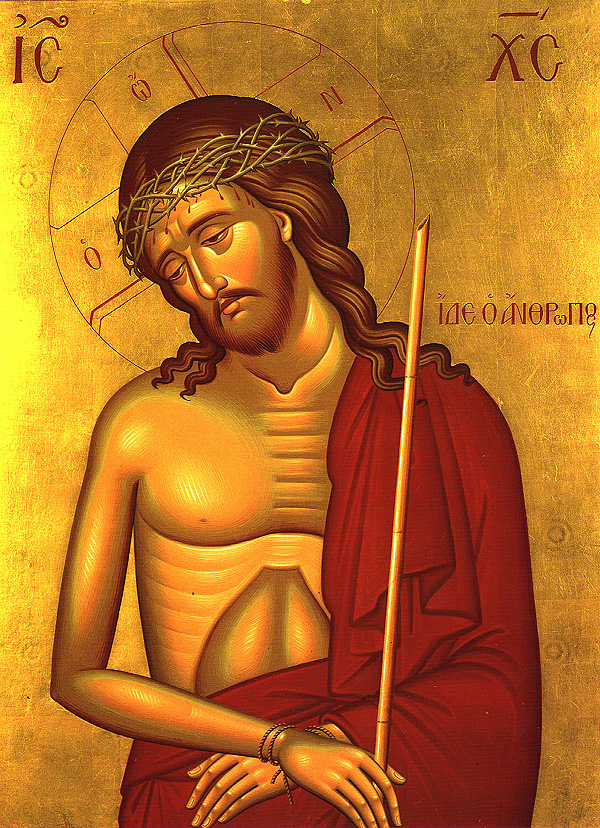
Brethren and Fathers, the present day is holy and to be venerated, for from this day the Lord begins to take on himself the sufferings of the Cross for our sake, in accordance with David's words: "Why did the nations rage and the peoples imagine vain things? The kings of the earth rose up and the rulers assembled together against the Lord and against His Christ" (Ps 2:1-2). They assembled together to plot an evil plan against the Master.
My beloved spiritual children in Christ Our Only True God and Our Only True Savior,
CHRIST IS IN OUR MIDST! HE WAS, IS, AND EVER SHALL BE.
+++
HUMILITY AND PATIENT ENDURANCE
By Saint Theodore the Studite
Brethren and Fathers, the present day is holy and to be venerated, for from this day the Lord begins to take on himself the sufferings of the Cross for our sake, in accordance with David's words: "Why did the nations rage and the peoples imagine vain things? The kings of the earth rose up and the rulers assembled together against the Lord and against His Christ" (Ps 2:1-2). They assembled together to plot an evil plan against the Master.
The deceitful Judas denied him utterly and betrays the Teacher with a deceitful kiss. The Lord of all things is led away prisoner, stands before the judgment seat, is interrogated and answers; and when He answers--O fearful report!--He is struck by a slave and bears it with longsuffering, saying: "If I have spoken evil, give testimony to the evil; but if well, why do you strike Me?" (St. John 18:23). Then He is scoffed at, mocked, jeered at, ridiculed, spat at, buffeted, scourged. He ascends the Cross, and when He has ascended He prays for His murderers: "Father, forgive them their sin, for they do not know what they do" (St. Luke 23:33). Then He is given gall with vinegar to drink, He is pierced by a lance, the Immortal is put to death.
These, in brief, are the Master's sufferings, and one who hears them with understanding is not angry, or embittered, or enraged, or puffed up, or arrogant towards his brother; is not envious, or filled with vainglory. Rather he is humbled, crushed, considers himself to be earth and ashes, desires communion in Christ's sufferings, is eager to be conformed to His death, so that he may have a part in the glory of His Resurrection.
But you too take courage, because you have shared and are sharing in the Master's sufferings. For you see where you are. Is it not for the sake of His word and His testimony that you are in exile and persecution? Have you not previously experienced prison? Have you not shed your blood under tortures? Have not some of our brothers died a martyr's death? Such then is our boast in the Lord, such our gift. But since until the end beatitude is not assured because of the ease of reversal and the impossibility of knowing what the morrow will bring to birth, stand your ground unflinching and unmoving in the Lord "striving side by side with one spirit and one soul for the faith of the gospel, in no way intimidated by your opponents (Phil 1:27-6), not giving offence in anything, but in everything recommending ourselves as god's ministers" (2 Corinthians 6:3-4), by obedience, humility, meekness, long-suffering, great endurance.
"For you need endurance in order to do God's will and obtain the promise. For in a little while He Who is coming will come and not delay" (Hebrews 10:36-37). But if He will come and not delay, why do we hate being in afflictions and do not rather choose to die each day for the Master? For it is written: "If we have died with Him, we shall also live with Him; if we endure, we shall also reign with Him; if we disown Him, He will also disown us; if we are unfaithful, He remains faithful; He cannot disown Himself" (1 Timothy 2:11-13).
How great the joy the Saints will have when they see the Lord "coming from Heaven with the Angels of His power" (2 Thess 1:7), inviting them with inexpressible joy, crowning them and becoming their companion forever and ever? What anguish will they have who have disobeyed the gospel and transgressed His Commandments? "They will suffer the penalty, as it is written, of eternal destruction, cut off from His presence and from the glory of His strength, when He comes to be glorified in His saints and marveled at among all who have believed" (2 Thess 1:9-10).
And so, brethren, as we contemplate and think on these things, again and again, let us purify ourselves from every defilement of flesh, and spirit, perfecting holiness in the fear of God" (2 Corinthians 7:1), zealous for what is evil, holding fast to what is good, loving one another with brotherly affection, outdoing one another in showing honor, not lagging in zeal, being ardent in spirit, serving the Lord, rejoicing in hope, patient in affliction, persevering in prayer" (Romans 12:9-12), that by such sincerity we may worthily celebrate the imminent Pascha, Christ Jesus our Lord, to Whom be glory and might with the Father and the Holy Spirit, now and forever, and to the ages of ages. Amen. (The above homily was given on the Wednesday of Holy Week, from Catechesis 72: On the Saving Passion; and Teaching on Humility and Patient Endurance. These Catecheses were given when Saint Theodore and his monks were in exile from Constantinople in the reign of Michael II (820-829 A.D.). Orthodox Heritage page 30, Vol. 17, Issue 03-04)
_________________________
"Glory Be To GOD For All Things!" -- Saint John Chrysostomos
+++
With sincere agape in His Holy Diakonia,
The sinner and unworthy servant of God
+Father George