
The Holy Season of Great Lent:Not by Bread Alone: Fasting Today in the Orthodox Christian Way (Part V)
At one point, the disciples of Saint John the Baptist posed a question to Jesus about fasting: "Why do we and the Pharisees fast often, but Your disciples do not fast?" (St. Matthew 9:14-15; St. Mark 2: 18-20; St. Luke 5:33-35). Jesus answered like this: "Can the friends of the bridegroom mourn as long as the bridegroom is with them? But the days will come when the bridegroom will be taken away from them, and then they will fast" (St. Matthew 9:15). Here again, Jesus not only accepts fasting as a proper religious discipline, but He also proclaims its future necessity for His own Disciples.

Venerable Isaac the Founder of the Dalamatian Monastery at Constantinople
My beloved spiritual children in Christ Our Only True God and Our Only True Savior,
CHRIST IS IN OUR MIDST! HE WAS, IS, AND EVER SHALL BE.
+++
NOT BY BREAD ALONE: FASTING TODAY IN THE ORTHODOX CHRISTIAN WAY (PART V)
By Reverend Father Peter A. Chamberas
At one point, the disciples of Saint John the Baptist posed a question to Jesus about fasting: "Why do we and the Pharisees fast often, but Your disciples do not fast?" (St. Matthew 9:14-15; St. Mark 2: 18-20; St. Luke 5:33-35). Jesus answered like this: "Can the friends of the bridegroom mourn as long as the bridegroom is with them? But the days will come when the bridegroom will be taken away from them, and then they will fast" (St. Matthew 9:15). Here again, Jesus not only accepts fasting as a proper religious discipline, but He also proclaims its future necessity for His own Disciples. The presence of the Messiah with His Disciples is a time of joy and gladness, not a time of mourning and fasting. A time will come, however, when the Bridegroom of the Church will be taken away, and then the people of the Church will mourn and fast. Clearly the question is not if the disciples are to fast, but rather when and why they are to fast.
A new reality has indeed come into the world with the teaching, life, death, resurrection and Ascension of Christ, as well as with the coming of the Holy Spirit and the creation of the Church. This new reality in the Church of Jesus Christ cannot be simply assimilated to an old and unredeemed way of life, much like "a new patch" cannot be superficially attached on "an old garment." It is also unwise and impracticable for "new wine" to be placed into "old wineskins" (cf. St. Matthew 9:14-17; St. Luke 5:33-38; St. Mark 2:18-22). Christ is the New Man, Who now demands a new way of life with new requirements and a new righteousness. The new Christian fasting, like the new teaching of Christ, will need to belong rather organically and properly to the new man in Christ and to the new Christian way of life. The Christian gospel is not a mere external corrective to some of the elements of Judaism, but rather something strikingly new. "If anyone is in Christ, he is a new creation; old things have passed away: behold all things have become new" (2 Corinthians 5:17). This expression of Saint Paul the Apostle is an excellent commentary on this new Christian way of life. Christianity is the "new wine" and "the good wine" (St. John 2:6-10) that requires "new wineskins," new men and women of faith in Christ, not only to accept it and contain it, but also to live by it properly and successfully with Christian humility and obedience to God.
Moreover, Jesus Christ did not come to destroy the Law and the Prophets, but to fulfill them (St. Matthew 5:17-18), and He did this both in His teaching and in His Person as the Savior of the world, Who inaugurated the Kingdom of God and initiated the Christian way of life in His Church. As the Christian Church grew and expanded into the pagan world, the Holy Apostles, Martyrs and Fathers included in their teaching, among other important matters, the Biblical Tradition of fasting as noted above. The focus, however, was clearly on the ascetical spirit that characterizes the Christian way of life from the very beginning and particularly after the 4th century, when the persecutions had ended and large numbers of people were coming into the Church and needed to be instructed and guided into the new Christian faith and way of life.
During those early centuries of Church history, the ascetic ideal of Christian living was especially taken up and developed by the new Christian institution of Monasticism, which introduced even more rigorous disciplines into its own way of life. With this in mind, we must be careful not to make a common mistake and assume that the strict discipline of Orthodox fasting, indicative of Great Lent and the other Lenten seasons in the life of the whole Church, is a monastic invention and appropriate only to its own rather strict ascetical way of life. This wrong notion is often repeated by skeptics today, and it must be dispelled again by the historical truth and the proper understanding of the tradition of fasting in the Orthodox Church. Fasting is not a monastic innovation; it is a biblical tradition adopted and practiced by the early Church and the Orthodox Church to the present time. Fasting is in fact a basic Christian virtue, a tried and true and invincible weapon against the wiles of Satan in a fallen and sinful world. And as such, fasting has the seal of approval of Christ Himself, Who practiced it and Who thus set the supreme example for all of His followers to emulate, as they seek to live their new life in Christ and for Christ.
________________________________
"Glory Be To GOD For All Things!" -- Saint John Chrysostomos
+++
With sincere agape in His Holy Diakonia (Ministry),
The sinner and unworthy servant of God
+Father George
The Holy Season of Great Lent: Not by Bread Alone: Fasting Today in the Orthodox Christian Way (Part IV)
When the Prophets of Israel referred to fasting in their preaching, they were invariably critical in their remarks. However, they did not condemn fasting itself as a religious practice, but rather the religious hypocrisy of the people in keeping the fast only externally and superficially, without the benefit of real mourning and true repentance over their sins, and, moreover, without the benefit of any works of mercy, righteousness and prayer that should have always accompanied their proper observance of the discipline of fasting.
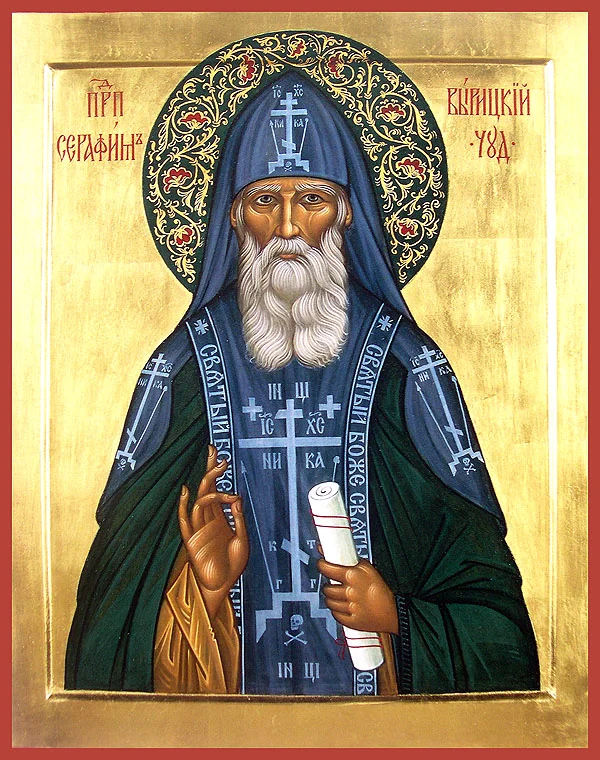
Venerable Seraphim of Vyritsa
My beloved spiritual children in Christ Our Only True God and Our Only True Savior,
CHRIST IS IN OUR MIDST! HE WAS, IS, AND EVER SHALL BE.
+++
NOT BY BREAD ALONE: FASTING TODAY IN THE ORTHODOX CHRISTIAN WAY (PART IV)
By Reverend Father Peter A. Chamberas
When the Prophets of Israel referred to fasting in their preaching, they were invariably critical in their remarks. However, they did not condemn fasting itself as a religious practice, but rather the religious hypocrisy of the people in keeping the fast only externally and superficially, without the benefit of real mourning and true repentance over their sins, and, moreover, without the benefit of any works of mercy, righteousness and prayer that should have always accompanied their proper observance of the discipline of fasting. The Prophet Isaiah especially sounded the warning against such formalized fasting and enumerated those elements that make fasting authentic and acceptable to God: "Wash yourselves, make yourselves clean. Put away the evils from your souls before my eyes...learn to do good...defend the orphan and justify the widow" (Isaiah 1:13-17). The Prophet went on to define the will of God with reference to the true nature of fasting that must be accompanied with a proper spiritual and moral content: "I did not choose such a fast, says the Lord; 'Rather, loose every bond of wrongdoing: untie the knots of violent dealings; cancel the debts of the oppressed; and tear apart every unjust contract. Break your bread for the hungry, and bring the homeless poor into your house...Then you shall cry out, and God will hear you...God shall be with you continually..." (Isaiah 58: 6-11).
The transition of true fasting from the Old Testament into the New Testament is beautifully illustrated by two personalities. The Prophetess Anna, who "never left the temple, but worshipped God day and night with fasting and prayer" (St. Luke 2:36), was blessed to see, together with the righteous Simeon, the forty-day old Child Jesus brought to the Temple. Saint John the Baptist and Forerunner, preaching fervently for the people to return to God with repentance and fasting, lived a most austere and ascetic life in the desert.
When Jesus Christ Himself was about to begin His public ministry, the Holy Spirit led Him into the desert and there, "He fasted for forty days and nights" (St. Matthew 4:1-2; St. Luke 4:2; cf. St. Mark 1:12). When Jesus became hungry, after fasting, He was tempted by Satan: "If you are the Son of God, command these stones become bread." But He answered and said, "It is written, man shall not live by bread alone, but by every word that proceeds from the mouth of God" (St. Matthew 4:3-4; cf. Deuteronomy 8:3). In rejecting this first temptation, Jesus reversed not only the disobedience of Adam, but also that of the Israelites, who often proved disobedient and rebellious to the will of God. Thus Jesus Christ not only confirmed the discipline of fasting of the Old Testament, but He also gave us His personal example to emulate. In addition, Jesus also gave us a new and specific teaching about fasting, first by correcting the abuses of the Pharisees of His time, and then by reintroducing the teaching of the prophets, and finally by adding the specifically Christian elements to the tradition of fasting.
The Pharisees, who represented the epitome of Jewish piety at that time and who "fasted twice a week" (St. Luke 19:12), did this only hypocritically, merely "to appear before the people as fasting" (St. Matthew 6:16), as the Lord Himself indicated. Like the Prophets of old, Jesus did not condemn the discipline of fasting as such, but rather preached against the insincerity with which it was being practiced. Here is His first teaching of fasting: "When you fast, do not be like the hypocrites, with a sad countenance. For they disfigure their faces that they may appear to men to be fasting. Assuredly, I say to you, they have their reward. But when you fast, anoint your head and wash your face, so that you do not appear to men to be fasting, but to your Father who is in the secret place; and your Father who sees in secret will reward you openly" (St. Matthew 6:16-18; cf. St. Luke 18:9-14). Here again it is clear that Jesus is teaching, like the Prophets of the Old Testament, that fasting, like every other practice of religious piety, must not be a mere external display of nonexistent piety, but rather the authentic expression of a person's love for God and man that motivates one to do everything that one does, including fasting.
(To be continued)
____________________
"Glory Be To GOD For All Things!" -- Saint John Chrysostomos
+++
With sincere agape in His Holy Diakonia (Ministry),
The sinner and unworthy servant of God
+Father George
The Second Sunday of Great and Holy Lent: Sunday of Saint Gregory of Palamas
The gospel for the first Sunday of Holy and Great Lent ended with an allusion to the ministry of Angels. And Angels are also called to mind by the Epistle (Letter) of Saint Paul (Hebrews 1: 10-2. 3). The sacred text compares the ministry of Angels with that, which is so much greater, of the Savior Himself. If disobedience to the messages transmitted to us by the Angels is justly punished, how much greater will be the punishment of the man who neglects the salvation that is announced and brought by Christ? For 'to which of the Angels said he at any time, Sit on my right hand, until I make thine enemies thy footstool'?

My beloved spiritual children in Christ Our Only True God and Our Only True Savior,
CHRIST IS IN OUR MIDST! HE WAS, IS, AND EVER SHALL BE.
+++
THE SECOND SUNDAY OF HOLY AND GREAT LENT SUNDAY OF SAINT GREGORY PALAMAS
The gospel for the first Sunday of Holy and Great Lent ended with an allusion to the ministry of Angels. And Angels are also called to mind by the Epistle (Letter) of Saint Paul (Hebrews 1: 10-2. 3). The sacred text compares the ministry of Angels with that, which is so much greater, of the Savior Himself. If disobedience to the messages transmitted to us by the Angels is justly punished, how much greater will be the punishment of the man who neglects the salvation that is announced and brought by Christ? For 'to which of the Angels said he at any time, Sit on my right hand, until I make thine enemies thy footstool'?
The gospel for this day (Saint Mark 2:1-12) tells of the healing of the man sick of the palsy at Capernaum. Jesus forgives him his sins, and, as the Scribes are astonished that anyone other than God can forgive sins, He answers: "Whether it is easier to say to the sick of the palsy, Thy sins be forgiven thee; or to say, Arise, and take up thy bed, and walk? But that ye may know that the Son of man hath power on earth to forgive sins...I say unto thee, Arise, and take up thy bed, and go thy way into thine house". The central theme of this episode is the power of both pardon and healing that the Lord Jesus possesses. Then there is the affirmation - even more, the demonstration - that healing and the forgiveness of sins cannot be separated. The man sick of the palsy, lying on his bed, has been put down at the feet of Christ. Now Jesus's first words are not: "Be healed", but: "thy sins be forgiven thee". In our physical illnesses, before imploring actual release, we must ask for inner purification and be absolved from our offences. Finally, Jesus tells the man who was sick of the palsy to take up his bed and to go to his house. On the one hand, the crowd will be more fully convinced of the reality of the miracle if this man is now seen to be strong enough to carry his litter; and, on the other, he who has been forgiven, and inwardly changed by Jesus must show those of his house, by some unmistakable sign (not only be carrying his litter, but by words, actions, behavior), that he is a new man resuming life in his own surroundings.
One notices that neither the Epistle (Letter) nor the gospel for this day has any bearing on Saint Gregory Palamas, Archbishop of Thessaloniki, with whose name the calendar none the less associates the Second Sunday in Holy Lent. This is because the commemoration of Saint Gregory Palamas was only introduced in the 14th century when the liturgical structure for this Sunday had already become established along different lines. The memory of Saint Gregory Palamas is, however, evoked in the services for Vespers (Esperinos) and Orthros (Matins). Saint Gregory expounded and defended, in the course of the heated controversy, the theological doctrine relating to Divine 'Light'. The texts of the services do not go into detail or give explanations of the concepts attributed to Saint Gregory Palamas but speak in a general way of Light and of Him Who said: "I am the light of the world". In a considerably abridged form, one of the texts for Orthros (Matins) brings together three ideas: that of Christ who illumines sinners, that of Lenten abstinence, and that of the word "arise", which the Savior spoke to the man sick of the palsy, and which we now address to Him: "to those who live in the darkness of sin, thou has brought light, O Christ, at this time of abstinence. Show us therefore the glorious day of Thy Passion, so that we may cry to Thee: Arise, O God and have pity on us." (Source: The Year of Grace of the Lord)
______________________
"Glory Be To GOD For All Things!" - Saint John Chrysostomos
+++
With sincere agape in His Holy Diakonia (Ministry),
The sinner and unworthy servant of God
+Father George
The Holy Season of Great Lent: Not by Bread Alone: Fasting Today in the Orthodox Christian Way (Part III)
From the early centuries of Church History, three more Lenten Seasons were gradually introduced into the annual liturgical cycle of the Church:

St. Cyril the Archbishop of Jerusalem
My beloved spiritual children in Christ Our Only True God and Our Only True Savior,
CHRIST IS IN OUR MIDST! HE WAS, IS, AND EVER SHALL BE.
+++
THE HOLY SEASON OF GREAT LENT: NOT BY BREAD ALONE: FASTING TODAY IN THE ORTHODOX CHRISTIAN WAY (PART III)
By Reverend Father Peter A. Chamberas
From the early centuries of Church History, three more Lenten Seasons were gradually introduced into the annual liturgical cycle of the Church:
A. The Christmas fast for the Nativity of Christ includes a period of forty days, beginning on November 15th. Meat, poultry, and meat products are entirely excluded during this period of forty days. However, from November 15 to December 12, the Feast of Saint Spyridon, fish is permitted not only during Saturdays and Sundays but also on Mondays, Tuesdays, and Thursdays. The time before Christmas, as with the time before Pascha, is a sober time of serious preparation, a time of prayer, fasting, and charity, and not a time for parties and entertainment. The time for a joyful yet sober celebration is after Christmas, not before.
B. The fast of the Holy Apostles Peter and Paul on June 29th, and of all the Twelve Apostles on June 30th, will vary in duration each year because it begins on the Monday after the Sunday of All Saints, following the Sunday of Pentecost, which comes fifty (50) days after Pascha, the moveable feast falling on a different date each year. If the Fast of the Holy Apostles is only a few days in duration, then it should be kept as strictly as possible, and if it is several weeks long, then meat, poultry, and meat products, dairy products, and eggs are excluded. Fish is allowed on all days except Wednesdays and Fridays.
C. The fifteen (15)-day fast of August precedes the Feast of the Holy Transfiguration of Christ on August 6th and the Feast of the Dormition (Koimisis) of the Theotokos on August 15th. This two-week fast is kept rather strictly, meaning that olive oil and wine are partaken only on the Saturdays and Sundays that fall within this period. On the Feast of the Holy Transfiguration, the fast is broken by adding only olive oil, wine, and fish to the festive meal.
A peculiar characteristic of the Orthodox Christian fasting is the treatment of each Saturday and Sunday that happens to fall within the longer periods of Ascetical Fasting during the four Lenten seasons of the year. Saturdays and Sundays are never strict fasting days, except for Holy and Great Saturday. In fact, the rule requires that the fast be suspended during these two days by simply adding something special to the Lenten means, such as olive oil and wine. This is the case because Sunday is always the day of the Lord par excellence reminding Christians of the Lord's Resurrection, the day when the faithful gather for public worship, celebrating the Holy Eucharist and having communion with the Risen Christ. Saturday also remains in the mind of the Church as the special Sabbath day, when God rested from work of creation. The special standing of these two days of the week in the life of the Church requires that they not be days of mourning and strict fast, even during the otherwise strict and long periods of Lenten fasting.
Some additional days of strict fasting are January 5th as the Forefeast of Theophany; August 29th as the day of the beheading of Saint John the Baptist and Forerunner; September 14 as the Feast of the Exaltation of the Holy Cross, which associates the finding of the Holy Cross by Saint Eleni (Helen) in 325 A.D. the recovery of the Holy Cross from the Persians by Emperor Heraclius in 628 A.D. and the Sacrificial death of Christ on the Cross on Holy and Great Friday. Additional circumstances for fasting may include times of special needs in a family, a parish, or a regional church; the reception of other Mysteries (Sacraments), besides Holy Communion, such as adult baptism, repentance, and confession, ordination, and marriage.
This general outline indicates briefly when and how Orthodox Christian observe a total of ascetical fast within the liturgical year of the Orthodox Church, which designates that well over 200 days of the year are, to some degree, days of fasting. But now the more important question may be asked: Why do Orthodox Christians fast, and why are they challenged to fast so much? The answer again is to be found in the Holy (Sacred) Tradition of the Orthodox Church that defines the nature of the Christian life as one involving the whole person of body and soul in a spiritual and total commitment to god. Fasting is not only a dietary discipline; it includes a spiritual component with even greater expectations and challenges that are, unlike the dietary elements, never relaxed.
The very first Commandment of God at the beginning of human life was one of fasting: "From the tree of the knowledge of good and evil you may not eat..." (Genesis 2:16-17). Saint Basil the Great reminds us that Adam and Eve were given this stern rule to practice self-control and obedience to the Divine Will. While called to strive for spiritual maturity and perfection, they disobeyed god's first commandment and lost paradise by not fasting. Moses fasted an extraordinary fast of forty days, not only once but twice, as a spiritual preparation while ascending the mountain to receive the revelation of God in the Ten Commandments (Exodus 34:27-28; Deuteronomy 9:9-11, 16-18), in setting this precedent Moses clearly projected the religious importance of fasting as an expression of sinful man's total orientation toward God. Through the physical ordeal of fasting and the inner compunction of repentance, man willingly afflicts and humbles himself before God and this enables him to appeal more fervently in prayer for the mercy and the forgiveness of god, but also to be vigilant and receptive to the revelation of God. Centuries after Moses, the Prophet Elijah, "being zealous for the Lord Almighty," kept a 40 day fast in the desert over the sins of Israel and as result the presence and power of God was finally revealed to him "in the sound of a gentle breeze" (cf. 3 Kings 19:8-12).
(To be continued)
____________________
"Glory Be To GOD For All Things!" -- Saint John Chrysostomos
+++
With sincere agape in His Holy Diakonia (Ministry),
The sinner and unworthy servant of God
+Father George
The Holy Season of Great Lent: Not by Bread Alone: Fasting Today in the Orthodox Christian Way (Part II)
o begin with, some definitions are in order. The Orthodox Church has two types of fasting: a) the total fast from all food and drink that is by its very nature short in duration, and b) the ascetical fast that is extended over longer but specific periods of time throughout the liturgical year of the Church. The total fast is also known as the Eucharistic fast and will normally be about twelve (12) hours, or, in other words, from the evening meal (or even from midnight) to the time of holy communion is received at the end of the divine liturgy on the next day.

1st Saturday of Lent: St. Theodore and the boiled wheat
My beloved spiritual children in Christ Our Only True God and Our Only True Savior,
CHRIST IS IN OUR MIDST! HE WAS, IS, AND EVER SHALL BE.
+++
NOT BY BREAD ALONE: FASTING TODAY IN THE ORTHODOX CHRISTIAN WAY (Part II)
By Reverend Father Peter A. Chamberas
To begin with, some definitions are in order. The Orthodox Church has two types of fasting: a) the total fast from all food and drink that is by its very nature short in duration, and b) the ascetical fast that is extended over longer but specific periods of time throughout the liturgical year of the Church. The total fast is also known as the Eucharistic fast and will normally be about twelve (12) hours, or, in other words, from the evening meal (or even from midnight) to the time of holy communion is received at the end of the divine liturgy on the next day. In the case of the Liturgy of the Presanctified Gifts, celebrated in the early evening the total fast may begin in the morning after a very light Lenten meal of at least from noon. The ascetical fast varies both in the duration of time and in dietary strictness, depending upon the particular day of the Lenten Season that is being observed in the liturgical life of the Church. Both fasts are an integral part of a personal spiritual life in the Orthodox Church.
From the earliest Apostolic age, Wednesday and Friday of each week were associated with the betrayal and the Passion of the Lord, respectively, and designated to be days of prayer and fasting for the Christians after the Church has separated from the synagogue. The 69th Apostolic Canon confirms this practice and even imposes the sanction of being discharged from clerical duties for clergy and excommunication for laity (people). Today the Wednesday and Friday fast mean that meats, poultry, fish, eggs, dairy products, olive oil, and wine are usually excluded from the food partaken on these days by Orthodox Christians. This strict weekly fast is especially observed during the four Lenten seasons of the Church year. Apart from these exceptions, a more moderate fast is practiced on Wednesdays and Fridays throughout the year that may include vegetables, pasta and shellfish (i.e., shrimp, crab, lobster, scallops, squid, calamari) cooked with olive or vegetable oil. In addition to the weekly fasting, the early Church began introducing other recurring periods of fasting on an annual basis. The earliest such fasting is the one associated with the annual commemoration of the Passion and Resurrection of Christ. At first time of fasting before Pascha was neither long--one or two days of total fasting--nor the same throughout the various regions of the ever growing and expanding Church. By 325 A.D. however, according to the 5th holy Canon of the First Ecumenical Synod in Nicaea, a forty-day period of fasting had already become a well-established tradition throughout the entire early Church. As the fasting period before Pascha gradually increased from several days of strict fasting to the entire Holy Week, and then, on top of that, to the 40 day fast of Great Lent, the initial total fast of only several days was naturally replaced by an ascetical fast that excluded certain foods, such as meats, fish and other animal products, such as milk, cheese and eggs. During the time of a prolonged ascetical fast, the Church, in her pastoral wisdom and experience, allows for certain personal exceptions to be made for the very old, the very young, the sick, the nursing mothers and other people in extraordinary circumstances or with special needs. Such exceptions are to be made with discretion and appropriate guidance by the parish priest, avoiding scandal and maintaining the edifying nature of the corporate discipline of the whole Church.
Knowing that the long and arduous discipline of fasting is both challenging and yet essential for the spiritual life of the faithful, the Church long ago also devised a reasonable and well-defined corporate pattern for all the faithful to follow. Before Great Lent actually begins, the theme is gradually introduced and fasting begins incrementally: The first week of the Triodion is without any fasting at all, including Wednesday and Friday; the second week of the Prodigal Son includes the usual fast on Wednesday and Friday, but all foods are eaten freely during the rest of the week; the third week of Meatfare or Judgment Sunday--marking the last day to eat meat before Pascha--fish, dairy products, eggs, olive oil, and wine are consumed freely throughout the week including Wednesday and Friday. Great Lent actually begins after Cheesefare or Forgiveness Sunday, on Clean Monday (Kathara Theftera), which is observed very strictly as a day of spiritual retreat, spending most of the time in prayer and reflection, while food intake is kept to a minimum, consisting or uncooked vegetable, fruit, dry nuts, bread, water and fruit juices. Sometimes, those who may be able to endure a more rigorous discipline only water or fruit juices, and breaking this very strict fast after receiving Holy Communion on Wednesday evening at the first Liturgy of the Presanctified Gifts. The remainder of the first week of Great Lent is also kept with a strict fast, which includes even the use of olive oil and wine. The use of olive oil and wine, however, may be used to moderate the strictness of the fast on the Mondays, Tuesdays, and Thursdays of the other weeks of great lent, based on any special personal and discretionary needs.
(To be continued)
__________________________
"Glory Be To GOD For All Things!" -- Saint John Chrysostomos
+++
With sincere agape in His Holy Diakonia (Ministry),
The sinner and unworthy servant of God
+Father George
First Sunday of Lent: The Sunday of the Triumph of Orthodox Christianity
This is the Faith of the Apostles, this is the Faith of the Fathers, this is the Faith of the Orthodox, this is the Faith which has supported the whole world.'
On this Sunday of Great Lent, our Church celebrates the Triumph of Orthodoxy, of the True faith, which has overcome all heresies and has been established once and for all. This is why it's called the Sunday of Orthodoxy.

My beloved spiritual children in Christ Our Only True God and Our Only True Savior,
CHRIST IS IN OUR MIDST! HE WAS, IS, AND EVER SHALL BE.
+++
FIRST SUNDAY OF GREAT LENT THE SUNDAY OF THE TRIUMPH OF ORTHODOX CHRISTIANITY
'This is the Faith of the Apostles, this is the Faith of the Fathers, this is the Faith of the Orthodox, this is the Faith which has supported the whole world.'
On this Sunday of Great Lent, our Church celebrates the Triumph of Orthodoxy, of the True faith, which has overcome all heresies and has been established once and for all. This is why it's called the Sunday of Orthodoxy.
The word 'orthodoxy' doesn't refer to any particular system, or any folk tradition or art. Orthodoxy is 'right thinking', the right faith in God. It's the Church, the One, Holy, Catholic and Apostolic Church. It's the body of our Lord. The definition of the Church was given to us by its founder Himself, the Lord, through the voice of Saint Paul, who, in his letter to the Ephesians reveals that: "...And He has made Him the Head over all things for the Church, which is His Body, the fullness of Him Who fills all in all" (22-23). It should be stressed that there is no Orthodoxy outside the Church.
This is why the Holy Fathers of the Church emphasize the fact that faith, Tradition, worship, and healing are all interwoven. They're so unified that it's impossible for people to live in an Orthodox Christian manner if they come adrift from even one of them. It's only within this context that we can talk about Orthodoxy.
But why is it called the Sunday of Orthodoxy? Because we celebrate the restoration of the Holy Icons and the triumph of the Orthodox Christian faith over the terrible heresy of the iconoclasts. The Sunday of Orthodoxy is the feast of the victories of the Orthodox Church in the past. These past victories are the moral capital of the Orthodox Church, its Cross, and its nourishment according to Saint Nicholas of Ochrid.
In 787, at the request of Patriarch Tarasios of Constantinople (honored on 25 February), Emperor Konstantinos VI and his mother Irene the Athenian convened the 7th Ecumenical Synod in Bithynia. The Synod decided in favor of the restoration of the holy icons and condemned both the iconoclast heresy and the idea of the depiction of the invisible and immaterial Trinity.
The dispute finally came to an end when Emperor Theofilos passed away in 842 and was succeeded by his infant son, Michael III. Because the boy was underage, his mother, Empress Theodora (+11 February) took over the reins of power. Theodora appointed three commissioners to ensure that, by God's grace, this heresy would cease to exist. Their first act was to remove and defrock the iconoclast Patriarch Ioannis Grammatikos, who was the main champion of the iconoclasts in their struggle against the iconodules. (Mount Athos - Wisdom - Holiness. Rafael Ch. Misiaoulis, Theologian)
Pan Orthodox Vespers (Sunday Evening)
You are all invited to worship and celebrate the Triumph of Orthodox Christianity on Sunday evening at 6:30 p.m. at our church. There will be fellow Orthodox Christians from our sister churches, Saints Peter and Paul Serbian Orthodox church of South Bend, and from the newly formed St. Joseph Bulgarian Orthodox church in Michigan. The priests participating will be Fr. Demetrios Harper and Fr. Gregory Owen. Father Demetrios will offer the homily.
A Lenten supper will be offered immediately following Vespers.
You are all encouraged to bring your favorite holy icon from home and participate at the procession of icons at Vespers.
Please do not disappoint us by not attending the celebration of our Holy Orthodox Church. It would be most embarrassing if only very few are in attendance from the host church, our parish.
In Christ's service,
+Father George