
The Eternal Kingdom
[Few Saints have been blessed with a vision of heaven while still in this life. Prophet Isaiah saw heaven (Isaiah 6:18), as did Prophet Ezekiel (1:1-28), and the holy Apostle John saw a new heaven--God's eternal Kingdom revealed as a city (Revelation 21:1-22:5).]

My beloved spiritual children in Christ Our Only True God and Our Only True Savior,
CHRIST IS IN OUR MIDST! HE WAS, IS, AND EVER SHALL BE.
+++
THE ETERNAL KINGDOM
[Few Saints have been blessed with a vision of heaven while still in this life. Prophet Isaiah saw heaven (Isaiah 6:18), as did Prophet Ezekiel (1:1-28), and the holy Apostle John saw a new heaven--God's eternal Kingdom revealed as a city (Revelation 21:1-22:5).]
When we read these passages, we note an abundance of mystical, apocalyptic imagery. But the strong similarities between these passages suggests an inspired consistency of reporting on the visions. The living creatures, the Light, the Cherubic beings, the Throne, and the glory of the Lord all work together to unveil a Kingdom of celestial Majesty and splendor.
While confessing with the Prophet Isaiah and the holy Apostle Paul that "eye has not seen, nor ear heard, nor have entered into the heart of man the things which God has prepared for those who love Him" (I Corinthians 2:9), we nonetheless find, taking the Holy Scripture as a whole; that certain things can be said about the eternal Kingdom.
1. The Saints who inhabit God's kingdom live in active fulfillment of his eternal plan. In the Kingdom, humanity becomes all it is meant to be. There is nothing at all in Holy Scripture to suggest that eternal life means people passively afloat on huge white clouds strumming harps unto the ages of ages.
Originally created to inhabit Paradise, our first parents chose to sin against God and were expelled from the Garden. The Kingdom of God was closed to mankind (Genesis 3:24). But God in His love called His creation back to Himself, speaking to us through the law and the Prophets and ultimately through His incarnate Son. Through new life in Jesus Christ, we are brought back by God's mercy into the new creation, His everlasting Kingdom. As kings and priests we will reign with Him forever (Revelation 1:6).
2. We experience a foretaste of the kingdom in the church. The very first words of the Divine Liturgy spoken by the priest are, "Blessed is the Kingdom of the Father and of the Son and of the Holy Spirit, now and ever and unto ages of ages." The Church at worship enters or ascends to the heavenly Kingdom. For it is in the Church that we are seated "together in the heavenly places in Christ Jesus" (Ephesians 2:6) and are raised to "where Christ is, sitting at the right hand of God" (Col. 3:1).
In worship we join the heavenly host--the Saints and the Angels--in giving praise to our God. As the body of Christ, we participate with that "great cloud of witnesses" (Hebrews 12:1) surrounding us as we come to "the Throne of God" (Hebrews 12:2). We come liturgically "to the city of the living God, the heavenly Jerusalem, to an innumerable company of Angels, to the general assembly and church of the firstborn who are registered in heaven, to God the Judge of all" (Hebrews 12:22, 23). With this heavenly vision, the Orthodox Church each Sunday remembers not only those in the parish but "all those who in faith have gone on before us to their rest."
3. Knowledge of the kingdom motivates us to live in complete devotion in Christ. In this life, we have a foretaste of the kingdom that inspires us to seek its fullness. In Saint Paul's words, "for now we see in a mirror, dimly, but then face to face" (I Corinthians 13:12). Worship is not a solitary act. Rather it is the Bride of Christ, the One Church--those on earth joining with those in heaven--giving thanks to our God and King, Who has made us citizens of His magnificent domain.
The holy Apostle John writes, "Beloved, now we are children of God; and it has not yet been revealed what we shall be, but we know that when He is revealed, we shall be like Him, for we shall see Him as He is. And everyone who has this hope in Him purifies himself, just as He is pure" (I John 3:2, 3).
(Source: Orthodox Study Bible)
________________________
"Glory Be To GOD For All Things!" -- Saint John Chrysostomos
+++
With sincere agape in His Holy Diakonia (Ministry),
The sinner and unworthy servant of God
+Father George
The Synaxis of Saint John the Baptist and Forerunner (January 7)
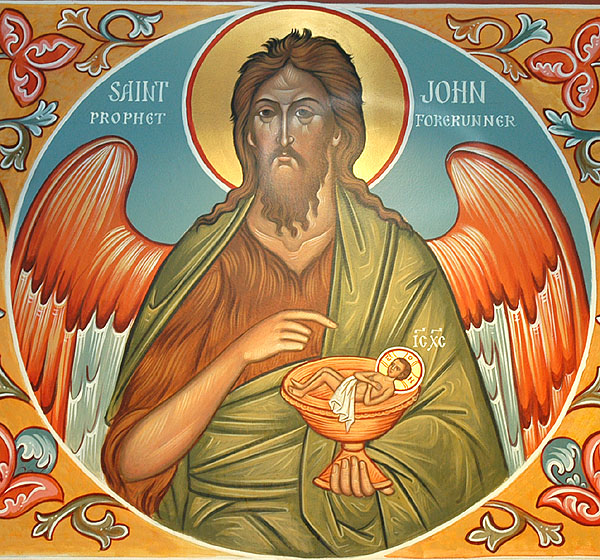
Saint John's greatest role during his life was enacted on the day of Theophany, and because of this the Church has, from the earliest times, dedicated the day following that feast to his memory. This day is also connected with an event involving the hand of the Forerunner. The Evangelist Luke desired to take Saint John's body from Sevaste, where the Great Prophet had been beheaded by Herod, to Antioch, his own birthplace. He succeeded, though, in acquiring and taking only one hand, which was kept in Antioch till the 10th century. I
My beloved spiritual children in Christ Our Only True God and Our Only True Savior,
CHRIST IS IN OUR MIDST! HE WAS, IS, AND EVER SHALL BE.
+++
OUR HOLY ORTHODOX CHRISTIAN CHURCH COMMEMORATES THE FEAST OF THE SYNAXIS OF SAINT JOHN THE BAPTIST ON JANUARY 7TH.
Saint John's greatest role during his life was enacted on the day of Theophany, and because of this the Church has, from the earliest times, dedicated the day following that feast to his memory. This day is also connected with an event involving the hand of the Forerunner. The Evangelist Luke desired to take Saint John's body from Sevaste, where the Great Prophet had been beheaded by Herod, to Antioch, his own birthplace. He succeeded, though, in acquiring and taking only one hand, which was kept in Antioch till the 10th century. It was then moved to Constantinople, whence it disappeared during the Turkish enslavement.
Saint John is commemorated several times during the year, but his greatest feast is on this day, January 7th. Among the Gospel-figures surrounding the Savior, the person of Saint John the Baptist holds a very special place, by the manner of his birth in this world and of his earthly life, by his role of baptizer of men to repentance and his baptism of the Messiah, and, lastly, by the tragic manner of his departure from this world. He was of such moral purity that he indeed deserved the name 'angel', as he was named in the Holy Scripture, rather than being thought of as just a mortal man. Saint John differs from all the other Prophets in that he had the joy of showing forth to the world the One Whom he had foretold.
About the hand of Saint John: it is related that each year, on his feast-day, the Archbishop would bring it out before the people. Sometimes the hand appeared open and sometimes clenched. In the first case it indicated that it would be a fertile year, and in the second that it would be a year of famine.
[The word "messenger" is, in Greek, 'anggelos'. See Malachi 3:1, St. Matthew 11:10 )
____________________
HOMILY
--on submission to the will of God.
"..Thy will be done, on earth as it is in heaven" (St. Mathew 6:10)
Blessed is John the Baptist, for he fulfilled the Gospel before the Gospel! Going out into the wilderness, he delivered himself over wholly to the will of God, in both body and spirit. And the will of God was done in his body on earth as also it was done in his spirit in heaven. Neither wild beasts harmed his body during his years in the wilderness, nor did despair harm his spirit in solitude nor pride in heavenly visions. He sought neither bread nor recognition from men. God gave him all that was needful, for he was completely given over to the will of God. He did not direct his own steps either into the wilderness or out of it. His life was steered by an invisible rudder, for when the time came for him to leave the wilderness and go to meet the Lord, it is written: "The word of the Lord came unto John" (St. Luke 3:2). Saint John spoke with the simplicity of an innocent child of his intercourse with heavenly powers: "And I knew Him not, but He that sent me to baptize with water, the same said unto me: 'Upon whom thou shalt see the Spirit descending, and remaining on Him, the same is He who baptizeth with the Holy Spirit.' And I saw, and bear record that this is the Son of God" (St. John 1:33-34). So tenderly and simply does he speak of heavenly things! And yet how terrifying he is, how like a lion, when he speaks against unrighteous men, against Herod and Herodias! The lamb and the lion live together within him. Heaven is a near to him as a mother is to her child, and the Will of God is as near and clear for him as to the Angels in heaven.
O Most Wise Lord, guide the lives of us sinners in the wilderness of this world to the doing of Thy Will, as Thou didst guide the life of Saint John the Baptist. To Thee be glory and praise forever. Amen. (Source: The Prologue from Ochrid)
_______________________
DIVINE SERVICES FOR THE FEAST OF SAINT JOHN:
Great Vespers at 7:00 p.m. this evening at Saint Nektarios Chapel
Orthros (Matins) at 9:00 a.m.
Divine Liturgy at 10:00 a.m.
_________________________
"Glory Be To GOD For All Things!" -- Saint John Chrysostomos
+++
With sincere agape in His Divine Theophany,
The sinner and unworthy servant of God
+Father George
A Theophany Within
Do you ever ask: "If Jesus is who He says He is, why don't I see Him more clearly?" Saint Thomas had the same doubts when his brother disciples told him that Jesus had resurrected. Jesus heard his plea and answered it: "Then He (Jesus) said to Thomas, "Put your finger here, and see my hands, and put out your hand, and place it in my side; do not be faithless, but believing...Thomas answered Him, 'My Lord and my God!'" (St. John 20:27-28).
My beloved spiritual children in Christ Our Only True God and Our Only True Savior,
CHRIST IS IN OUR MIDST! HE WAS, IS, AND EVER SHALL BE. Ο ΧΡΙΣΤΟΣ ΕΝ ΤΩ ΜΕΣΩ ΗΜΩΝ! ΚΑΙ ΗΝ ΚΑΙ ΕΣΤΙ ΚΑΙ ΕΣΤΑΙ.
+++
A THEOPHANY WITHIN
[Source: Antiochian Orthodox Christian Archdiocese of America]
Do you ever ask: "If Jesus is who He says He is, why don't I see Him more clearly?" Saint Thomas had the same doubts when his brother disciples told him that Jesus had resurrected. Jesus heard his plea and answered it: "Then He (Jesus) said to Thomas, "Put your finger here, and see my hands, and put out your hand, and place it in my side; do not be faithless, but believing...Thomas answered Him, 'My Lord and my God!'" (St. John 20:27-28).
Yet if Thomas got such a visible sign, why does it seem we are left in the dark? Could it be that we don't know how to listen? Look at communication in today's world for example. So much of the media is overpowering. It ranges from the lyrics of rap music to the pulsating beat of rock and roll, to commercials played everywhere it seems, even to music in bathrooms and television in fast food shops -- all of it is calculated to appeal to the senses. Some Christian churches even lace their services with splashy music and Las Vegas style light shows. What does any of this have to do with God?
We have all this noise and distraction because the world wants to hold us captive, and the path to our incarceration is through the senses. The human body can be captivated by the senses. Sounds, smells, tastes, and what our eyes behold can become an intoxicating delight. And when it wears off, it takes more sounds, stronger smells and tastes, and greater visual stimulation to renew the intoxication.
But whose work is this: God's or the evil one?
The Holy Church Fathers noted the problem years ago. Saint Ilias the Presbyter wrote: "...the light of the spirit has grown dim within the soul, whereas the light of the sensible world shines more brightly within it" (Philokalia III). What Saint Ilias means is that person drunk on sensory stimulation will crowd out the light that burns naturally in the soul. Push it aside far enough and the light will dim to almost nothing.
How do we find God? "God is a Spirit, and those who worship Him must worship Him in Spirit and in Truth," the Holy Scripture teaches (St. John 4:24). The worship begins with a silencing of the heart and mind so that the soul can receive Him. Saint Didochos of Photiki said: "...but where there is richness of the Spirit, no speech is possible. At such a time the soul is drunk with the love of God and, with voice silent, delights in His glory" (Philokalia I). He means that the focusing on sensory things alone cannot lead us to God. Further, when the focusing becomes extreme we enter idolatry.
The self-manifestation of God is not apprehended through sensory experience but in the stillness of the soul. Encountering God is by necessity quiet and peaceful. God comes to us when we prepare ourselves to receive Him by bringing our senses under control, by elimination the noise and clamor in the world, and by refusing the intoxication the world offers through our senses.
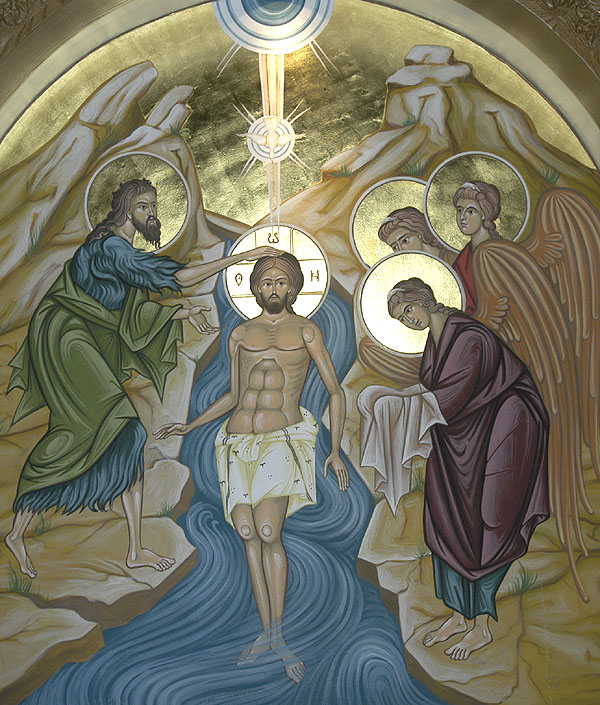
And this manifestation replicates in its own way the physical manifestation of Jesus as the Son of God at Theophany (the Baptism of Christ): "...And I saw the Spirit of God descending like a dove, and alighting on Him; and lo, a voice from heaven, saying, "This is My Beloved Son, with Whom I am well pleased" (St. Matthew 3:16-17).
Sensation Seeking
How do we break free of sensory captivation? Contemporary empirical findings in scientific psychology lend insight into how this psycho-spiritual intoxication takes place. Zuckerman (1993) found a personality dimension he termed sensation seeking. Persons scoring high on this dimension have a "generalized preference" for high levels of sensory stimulation. They constantly look for fresh exhilarating experiences. Zuckerman reported a strong genetic predisposition for this personality trait.
High sensation seekers are inclined 1) to thrill and adventure seeking such as skydiving; 2) to unusual activities such as wild parties; 3) those at the extremes are usually disinhibited thus prone to heavy drinking, drug use, gambling and sexual experimentation; and 4) exhibit a susceptibility to boredom with low tolerance for routine repetition. While few persons are at the extreme, even those moderately inclined toward sensation seeking prefer external sensory stimulation over internal reflection. It is easy to see how such individual can miss the unknown God Who reveals Himself in silence. They simply don't know this dimension of human experience.
What might be helpful for anyone inclined to sensation seeking is to develop a spiritual life. Many Holy Church Fathers have pointed out that it is better to say one prayer deep from the heart, than many prayers in a routine and superficial way. Persons disposed to high sensation seeking might keep their prayers, meditations, and quite times short but open to God revealing Himself, and in particular listening for His voice.
Theophany and Free Will
God reveals His Son in the silence of our soul. Why might God do this? One reason is that communion with God requires our active participation. Our will must be conformed to God's will.
Take the Holy Scripture. Many passages are not clear cut. Under the inspiration of the Holy Spirit guidance our Church and the Holy Fathers, we have to struggle to make sense of them. When we look at the Lord's life as recorded in Holy Scripture for example, we always see an ambiguity. Almost everything our Lord did demand an interpretation that we must provide. Our inner orientation - our capacity to see and understand -- must be developed in order to see who the Lord really is. The Pharisees, Sadducees, and Scribes continually saw the work of Jesus but concluded He was a malefactor. Those with purity of heart saw the same works but concluded that Jesus was the Son of God, the Good God Who loves mankind. Which ones are we?
Meditate on the Troparion (hymn) of the Theophany:
Lord, when You were baptized in the Jordan, the worship of the Trinity was made manifest. For the voice of the Father gave witness to You, calling You Beloved; and the Spirit, in the form of a dove, confirmed the certainty of His words. Glory to You, Christ Our God, Who appeared and enlightened the world.
If we experience the Theophany within ourselves, we will see the Lord all around us. The psalmist says "The heavens declare the glory of God, and the firmament declares His handiwork (Psalm 19:1). If we listen on the inside, we will see clearly what lies on the outside. The senses are freed and clamor of the world loses its power over our minds and hearts so that the Lord might reveal Himself to us more and more.
_____________________
"Glory Be To GOD For All Things!" -- Saint John Chrysostomos
+++
With sincere agape in His Divine Theophany,
The sinner and unworthy servant of God
+Father George
The Orthodox Sacred Tradition of Holy Water (Part III)
After the Epistle (Letter) of Saint Paul (1 Corinthians 10:1-4) is read about the mystical prototype baptism of the Judeans unto Moses in the cloud and in the sea, and of their spiritual food in the desert and the spiritual drink from the Rock, which is an image of the Coming of Jesus Christ. Finally, the Gospel Lesson of Saint Mark (Mark 1:9-12) is read in which the holy Apostle tells about the actual Baptism of the Lord.

My beloved spiritual children in Christ Our Only True God and Our Only True Savior,
CHRIST IS IN OUR MIDST! HE WAS, IS, AND EVER SHALL BE. Ο ΧΡΙΣΤΟΣ ΕΝ ΤΩ ΜΕΣΩ ΗΜΩΝ! ΚΑΙ ΗΝ ΚΑΙ ΕΣΤΙ ΚΑΙ ΕΣΤΑΙ.
+++
THE ORTHODOX TRADITION OF BLESSING THE WATER AT THEOPHANY (Part III)
How the Order of the Great Sanctification of Water at Theophany takes Place.
After the Epistle (Letter) of Saint Paul (1 Corinthians 10:1-4) is read about the mystical prototype baptism of the Judeans unto Moses in the cloud and in the sea, and of their spiritual food in the desert and the spiritual drink from the Rock, which is an image of the Coming of Jesus Christ. Finally, the Gospel Lesson of Saint Mark (Mark 1:9-12) is read in which the holy Apostle tells about the actual Baptism of the Lord.
How striking, lofty and Divine is the voice of the Church, with which it calls the Lord from the heavens unto our earthly waters! "Great art Thou, O Lord, and marvelous are Thy works, and speech sufficeth not to sing praises of Thy wonders. For Thou, by Thy will, from nothingness hast brought all things into begin; by Thy Majesty Thou dost uphold all creation, and by Thy Providence Thou dost direct the world…All the reason-endowed powers tremble before Thee. The Sun singeth Thy praises, and the Moon glorifieth Thee; the Stars, also, stand before Thy presence. The Light obeyeth Thee. The depths shudder with awe before Thee; the water springs do Thy bidding. Thou hast spread out the heavens like a curtain. Thou hast established the earth upon the waters. With sand hast Thou walled in the sea. Thou hast shed abroad the air for breathing. The Angelic Powers serve Thee. The Archangelic Hosts adore Thee...For Thou, the God which cannot be circumscribed, Who art from everlasting and ineffable...Wherefore do Thou, O King Who lovest mankind, come down now also through the descent of Thy Holy Spirit, and sanctify this water."
The Priest blesses the water with his hand three times at the time of reading these words: "Wherefore do thou, O King Who lovest mankind, come down now also through the descent of Thy Holy Spirit, and sanctify this water."
In addition to the immersion of the precious Cross into the water three times, the Great Agiasmos (in Greek, "holy", is the name give to the water, sanctified during the Great Blessing of Water) is also blessed by the Sign of the Cross, and by more powerful and more complex prayers and hymns, than during the Lesser Blessing of Water.
"Wherefore do Thou, O King Who lovest mankind, come down now also through the Descent of Thy Holy Spirit, and Sanctify this water. And impart unto it the grace of redemption, the blessing of Jordan. Make it a fountain of immortality; a gift of sanctification, a remission of sins, a healing of infirmities, a destruction of demons; unapproachable by hostile powers, filled with angelic might." Here it is requested that water be filled with angelic might, and if this is being requested then, with faith, the acquisition of such mystical power by the water is possible -- and will occur... The Priest prays with these powerful and commanding words. But before this, a Deacon raises almost the same supplications:
"That these waters may be sanctified by the power, and effectual operation, and descent of the Holy Spirit...
That there may descend upon these waters the cleansing operation of the Super-Substantial Trinity...
"That He will imbue them with the grace of redemption, the blessing of Jordan...
"That the Lord our God will send down the blessing of Jordan and sanctify these waters...
"That this water may be unto the bestowing of sanctification; unto the remission of sins; unto healing of soul and body: and unto every expedient service...
"That this water may be a fountain welling forth unto life eternal...
"That it may manifest itself effectual unto the averting of every machination of our foes, whether visible or invisible...
"For those who shall draw of it and make it unto the sanctification of their homes...
"That it may be for the purification of the souls and bodies of all those who, with faith, shall draw and partake of it...
After the reading of all prayers, the Priest immerses the precious Cross into the water three times, holding it upright with both hands while singing the Apolytikion (Dismissal ) Hymn of Theophany: "When Thou wast baptized in the Jordan, O Lord, the worship of the Trinity was made manifest; for the voice of the Father bore witness to Thee, calling thee His Beloved Son. And the Spirit in the form of a dove confirmed the certainty of the Word. O Christ Our God, Who hast appeared and hast enlightened the world, glory to Thee." The Priest takes the vessel with holy water and sprinkles in all directions in the form of a cross. After this, the Christian faithful come up to venerate (kiss) the Cross that the Priest is holding and sprinkles each person with Holy Water.
Saint John Chrysostomos has said that the Water of Theophany remains unspoiled for many years, being fresh, pure and pleasing, as if it has been drawn from a living spring at this very moment. This is the miracle of God's grace, which even now everyone can see!
According to our Holy Church belief, the Agiasmos (Holy Water) isn't just of spiritual significance, but a new being, a spiritual-corporeal being, an intertwining of heaven and earth, of grace and matter, and a close one at that. This is why the Great Agiasmos (Holy Water of Theophany) according to Church Canons is viewed as a kind of a lower degree of Holy Communion: in those cases, when a penance and a prohibition against approaching (to receive) the Holy Body and Blood of our Lord Jesus Christ is imposed on a member of the Church due to committed sins, there is a provision, usual to Canons: "He or she may drink Agiasmo (Holy Water) only."
Many mistakenly think that water, blessed on the Eve of Theophany and water blessed on the day of Theophany are different, but in actuality, the same order of the Great Blessing of Water is used both, on the Eve and on the day of Theophany. The Holy Water of Theophany is a holy relic that should be found in the home of every Orthodox Christian. It is carefully and reverently kept in the Holy Icon corner next to the Holy Icons. It is not enough to have it at home it must be used throughout the year by the Orthodox Christians living at that home.
_________________________
"Glory Be To GOD For All Things!" -- Saint John Chrysostomos
+++
With sincere agape in His Divine Theophany,
The sinner and unworthy servant of God
+Father George
The Orthodox Sacred Tradition of Holy Water (Part II)
“A woman of Samaria came to draw water. Jesus said to her, 'Give Me a drink.' For His disciples had gone away into the city to buy food. Then the woman of Samaria said to Him, 'How is it that You, being a Jew ask a drink from me, a Samaritan woman?' For Jews have no dealings with Samaritans. Jesus answered and said to her, 'If you knew the gift of God, and Who it is who says to you, 'Give Me a drink,' you would have asked Him, and He would have given you living water.' The woman said to Him, 'Sir, You have nothing to draw with, and the well is deep. Where then do You get that living water? Are You greater than our father Jacob, who gave us the well, and drank from it himself, as well as his sons and his livestock?' Jesus answered and said to her, 'whoever drinks of this water will thirst again, but whoever drinks of the water that I shall give him will never thirst. But the water that I shall give him will become in him a fountain of water springing up into everlasting life" (St. John "4:10-14).

My beloved spiritual children in Christ Our Only True God and Our Only True Savior,
CHRIST IS IN OUR MIDST! HE WAS, IS, AND EVER SHALL BE.
+++
THE ORTHODOX TRADITION OF BLESSING THE WATER
"A woman of Samaria came to draw water. Jesus said to her, 'Give Me a drink.' For His disciples had gone away into the city to buy food. Then the woman of Samaria said to Him, 'How is it that You, being a Jew ask a drink from me, a Samaritan woman?' For Jews have no dealings with Samaritans. Jesus answered and said to her, 'If you knew the gift of God, and Who it is who says to you, 'Give Me a drink,' you would have asked Him, and He would have given you living water.' The woman said to Him, 'Sir, You have nothing to draw with, and the well is deep. Where then do You get that living water? Are You greater than our father Jacob, who gave us the well, and drank from it himself, as well as his sons and his livestock?' Jesus answered and said to her, 'whoever drinks of this water will thirst again, but whoever drinks of the water that I shall give him will never thirst. But the water that I shall give him will become in him a fountain of water springing up into everlasting life" (St. John 4:10-14).
+
Why the Church Blesses Water
Why does the Church, again and again, bless water, if it has already been blessed by the Baptism of the Son of God Himself?
Why, the fallen, even though renewed by God's grace, always, until death carries within us the seed of ancient sinful uncleanness, and for that reason, we are always capable of sinning, and by this, we, again and again, introduce into the surrounding world uncleanness and decay. For this reason, our Lord Jesus Christ, having ascended into heaven, left with us His Living and Life-giving Logos/Word, granted the faithful the right to bring down to earth the blessing of the Heavenly Father through the strength of their faith and prayer, and send down the Comforter Spirit of Truth, Who is always present in the Church of Christ, so that despite the inexhaustible seed of sin and uncleanness in the hearts of mankind, the Church would always have an inexhaustible source of sanctification and life.
In keeping this Commandment of God, the Holy Church by the Logos/Word of God, by means of Holy Mysteries (Sacraments) and prayers always blesses not only the man himself but also everything that he uses in the world. By this, the Church limits the spread of the sinful uncleanness and prevents the multiplication of destructive consequences of our sins.
The Church "blesses land," asking God for the blessing of fertility; it "blesses bread" which serves us as food and water which quenches our thirst. Without blessing, without sanctification, could this mortal food and water sustain our life? "It is not the growing of fruits that nourish man; but that it is Thy word, which preserveth them that put their trust in Thee" (Wisdom of Solomon 16:26). From this emerges the answer to the question of why the Church blesses water. By blessing water the Church returns to the element of water its original purity and holiness, and through the strength of prayer and the logos/word of God, brings down onto the water the Lord's blessing and the grace of the most Holy and Life-giving Spirit.
Why Water is Blessed in Special Vessels
Like everything else in the Church, the vessel (Font) in which the blessing of water takes place carries great symbolic meaning.
Externally, this vessel resembles a chalice for communion. The vessel for the blessing of water is a large bowl on a low stand with a round base for placement on a table. On the eastern side of the bowl (font), there are places where three candles are put at the start of the blessing of water, in the image of the Holy Trinity, which sanctifies and enlightens people by God's grace. As a vessel and container (font) of God's grace, the bowl (font) for the blessing of water approaches in its symbolic meaning the Eucharistic cup -- the chalice (translated from Greek - a vessel for drinking) -- and, like the chalice, signifies the Theotokos and Ever-Virgin Mary, in Whose womb formed the human nature of Our Lord Jesus Christ. The round base of the font for the blessing of the water symbolizes the circle of the EARTHLY Church, the round font itself, into which water is poured, symbolizes the heavenly Church, and both together they are symbolic of the Mother of God, as the Most Pure Vessel of God's grace.
The Baptismal bath possesses the same basic symbolic meaning. This vessel (font) is also made to look like a cup, but of a significantly great size than the vessel for the blessing of water, and on a high stand.
How the Order of the Great Sanctification of Water Takes Place
The order of the Blessing of Water which takes place during the Feast-Day of Theophany is called great because of an especially festive ceremony, imbued with the remembrance of the Lord's Baptism, in which the Church sees not only the prototype of the mystical washing of sins but also the actual blessing of the nature of water itself, through the immersion into it of God in the flesh.
The Great Blessing of Water sometimes takes place at the end of the Divine Liturgy, after the prayer behind the amvon, and sometimes at the end of Vespers after the litany: "Let us complete our evening prayer..." It takes place during the Divine Liturgy of Theophany, and also on the Eve of Theophany when the Eve falls on any day of the week besides Saturday or Sunday.
The Great Blessing of Water is begun with the singing of hymns: "The voice of the Lord crieth out over the water, saying: Come, receive ye all the spirit of wisdom, the spirit of understanding, the spirit of the fear of God, even Christ Who is made manifest", "Today is the nature of water sanctified" and others. Three readings from the Book of the Prophet Isaiah (35:1-10; 53:1-13; 12:3-6) are read next. The great Prophet of the Old Testament thrice foretold the Lord's Baptism in the Jordan River, which took place at the junction of the two Testaments. He expressed joy and hope of the Church in the drawing of water from the source of salvation: "Ho, every one that thirsteth, come ye to the waters...Seek ye the Lord while He may be found, call ye upon ;Him while He is near: Let the wicked forsake his way, and the unrighteous man his thoughts: and let him return unto the Lord, and He will have mercy upon him; and to our God for He will abundantly pardon" (Isaiah 55:1, 6-7).
(To be continued)
______________________
Please note: Our church keeps Great Agiasmo (Holy Water) inside the holy Altar throughout the year and you may, as often as you wish, ask for it at any time of the year. This also applies to Holy Oil (Holy Unction). If you or a family member is ill you may ask your priest to read a prayer over you and then to anoint you with Holy Oil (Ευχέλαιον).
Small special bottles with holy water will be given out on Sunday following the Great Blessing of Water.
__________________________
Glory Be To GOD For All Things!" -- Saint John Chrysostomos
+ + +
With sincere agape in His Divine Theophany,
The sinner and unworthy servant of God
+ Father George
The Orthodox Sacred Tradition of Holy Water
During our entire life there is a great blessing next to us -- holy water. Blessed water is a form of God's grace: it cleanses the Christian believers from spiritual uncleanness and sanctifies and strengthens them for the spiritual struggle of salvation in God.
My beloved spiritual children in Christ Our Only True God and Our Only True Savior,
CHRIST IS IN OUR MIDST! HE WAS, IS, AND EVER SHALL BE.
+++
During our entire life there is a great blessing next to us -- holy water. Blessed water is a form of God's grace: it cleanses the Christian believers from spiritual uncleanness and sanctifies and strengthens them for the spiritual struggle of salvation in God.
We are immersed in it for the first time at Baptism, when during this Mystery (Sacrament) we are lowered into a vessel (Baptismal Font) filled with holy water. Holy water of the Mystery of Baptism washes away sinful uncleanness of man; it renews and revives him into a new life in Christ. We are reborn through Water and the Spirit. Holy water is certainly present during the blessing of churches and of all objects used in church divine services, during the blessing of residential homes, buildings and any everyday objects. We are sprinkled with holy water on the Feast of Theophany and other services throughout the ecclesiastical year.
"Blessed Water", wrote the luminary Dimitri Hersonsky, "has the power to sanctify souls and bodies of everyone who makes use of it. Partaken with faith and prayer, it heals our bodily infirmities." Holy Water quenches the fire of passions.
Saint Seraphim, after (hearing) confessions of pilgrims, always gave them to drink from a cup of holy water. Venerable Ambrose sent a bottle of holy water to a terminally ill person, and the incurable illness, to the amazement of doctors, was gone. When someone was very ill, elder Seraphim blessed him to take a tablespoon of holy water every hour. The elder (geronda) used to say that there was no stronger medicine than holy water and holy oil (holy Unction).
Blessing of water was accepted by the Church from the Holy Apostles and their successors. But the first example was given by the Lord Himself when He immersed Himself into the Jordan River and made holy the nature of water.
Water was not always in need of sanctification. There were times when everything on earth was pure and holy. "And God saw everything that he had made", says the Book of Genesis (Old Testament), "was very good" (Genesis 1:31). At that time, before the fall of man, all was created by God's word, all came to life through the Holy Spirit that dwelled above the water. Everything on earth bore the Seal of the God's All-Sanctifying Blessing, and because of this, earthly elements served for the benefit of man: they supported life and preserved the body from destruction. Living in these harmonious surroundings of Paradise, man, as promised by God, was meant to be immortal, "For God made not death" (Wisdom of Solomon 1:13).
But man himself, through association with an unclean spirit, took into his soul the seed of uncleanness. And then the Spirit of God stepped away from the unclean creation: "And the Lord said, My spirit shall not always strive with man, for that he also is flesh" (Genesis 6:3). Now, everything that the hands of sinners touched became unclean, everything became a weapon of sin, and therefore was deprived of God's blessing and was subjected to damnation. The elements, that previously served man, changed. The earth now produced thorns and wolves; the air, saturated with decay, became dangerous and sometimes lethal. Water, having turned into a runoff of sewage, became contagious, dangerous, and now in the hands of God's righteous judgment began to act as a weapon of punishment of the unrighteous.
But this does not mean that mankind has been denied holy water. The spring, brought out of a mountainside by Moses streamed, of course, not ordinary water but special water. Not ordinary was the water in the well of the Samaritan woman, which had been dug out by the forefather Jacob and later sanctified by our Savior's conversation at this source.
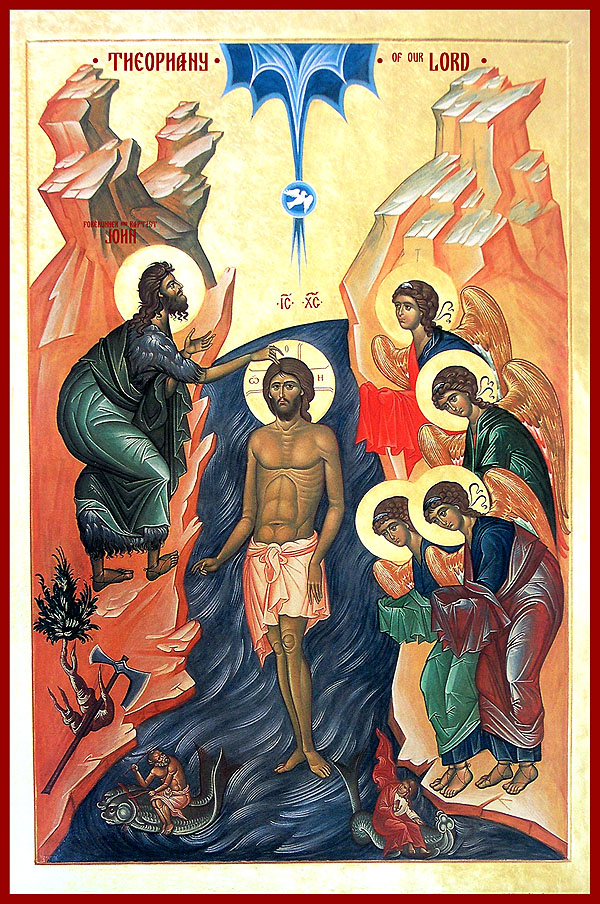
The idea of holy water is encountered even in the Old Testament: "and the priest shall take holy water in an earthen vessel" (Numbers 5:17). But water that is altogether special runs in the Jordan River. Our Lord Jesus Christ appeared on the Jordan River in order to sanctify the essence of water and to make it a source of blessing for the mankind. That is why at the time of Baptism of our Lord in the River Jordan, it was as if the wonder of creation was repeated: the heavens opened up, the Spirit of God descended, and the voice of the Heavenly Father was heard: "This is My Beloved Son, in Whom I am well pleased" (St. Matthew 3:17). Thus, blessing of water took place for the first time after the fall of man into sin. (Author Unknown)
(To be continued)
__________________________
"Glory Be To GOD For All Things!" - Saint John Chrysostomos
+++
With sincere agape in His Holy Theophany,
The sinner and unworthy servant of God
+Father George